Family Taco Night Without the Chaos
Family taco night without the chaos: a self-serve bar, portion planning, toppings, dietary variations, and a fast cleanup routine for weeknights.

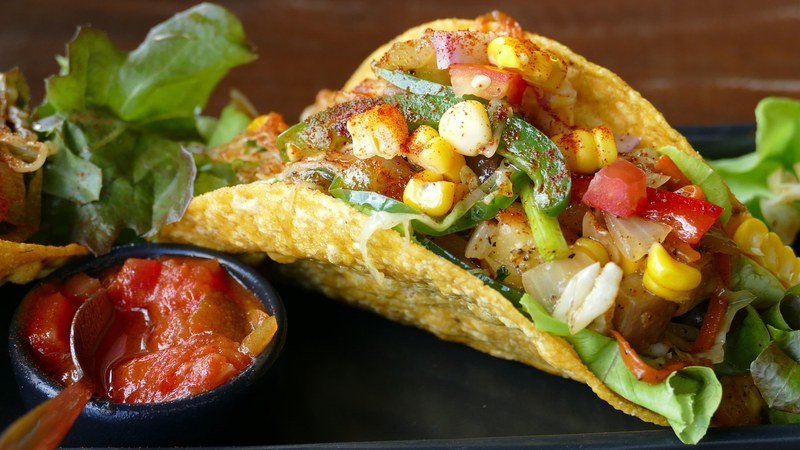
- Give the bar one direction: plates, tortillas, filling, toppings, sauce, then out. Taco night turns chaotic when everyone reaches across everyone else.
- Count tortillas and filling per person before dinner starts, then keep a few spare. Running out of shells at 6:20 is a different problem from running out of salsa.
- Keep the base mild and put heat, dairy, and crunch on the side. That one habit covers most dietary differences at the table.
At 6:10 on a Tuesday, the counter is a traffic jam. One child is holding a broken shell, a second is eating shredded cheese straight from the bowl, someone's sleeve is in the sour cream, and the person who cooked is still at the stove because there is no room left to make a plate. The food was fine. The layout was not.
The opposite failure is just as common. A family sets out every topping it owns, each in its own little bowl, because choice feels generous. Nine bowls, eleven utensils, and a table with no room left to sit. Everyone builds one overfilled taco, most of it lands on the plate, and the sink fills before the meal is half over.
A taco bar works when you treat it as a short assembly line rather than a buffet. The order of the bowls, the height of the counter, and the number of tortillas matter more than whether the salsa is homemade. The plan below keeps the line moving and the cleanup small enough to finish before bedtime.
Why taco night falls apart at the counter
Most taco night problems are queue problems. Four people arrive at the counter at once, and the person in the middle cannot reach the cheese without leaning across the person building a taco. Tortillas tip and filling lands on the counter. A single-file line from one end to the other fixes more of this than any new gadget.
Every extra bowl adds a decision and a dish. With ten toppings, a tired child samples six with their fingers and puts three back. With six, the same child picks two and eats. The number of options is not a measure of hospitality; it is a measure of how many things you will wash later.
Temperature is the quiet third problem. Tortillas warmed at 5:40 are cold and stiff by 5:55 if they sit open on a plate, and cold shells crack. Meanwhile the cook is still browning meat, so the hot part arrives after the eaters and the person who did the work eats last.
Build a bar that moves in one direction
Lay the bar out like a lane, not a circle. Plates first, then tortillas, then the hot filling, then cheese and beans, then cold toppings, then sauces at the exit. Salsa and sour cream go last because they are the messiest things on the table. When they sit first, every plate that follows drags a trail of red across the counter.
Warm tortillas need somewhere to hold heat. A towel-lined bowl with a lid, a covered basket, or a low oven on its warm setting all work. Wrap soft tortillas in a clean towel and keep them covered until the first person is ready. If you use crisp shells, warm them briefly and stand them upright so they do not snap.
Use fewer, larger bowls. Six to eight toppings is enough for most families, and a wide bowl is easier to scoop from than a narrow one. Give each bowl its own tongs and set a small plate underneath to catch drips. For a child who cannot reach, add a low shelf with three familiar items; the adult bar stays out of elbow range. On a narrow counter, serve from one side and carry plates to the table.
Taco night is easier to repeat when it has a place in a larger week. The generator above asks for family size, weeknight cooking limit, and any dietary preference, then fills seven days from a pool that includes taco night. Use it to make taco night one reliable dinner, not the only one you can think of on a Tuesday.
Work out portions before the first tortilla
Portion estimates are a starting point, not a rule, but having a number prevents the two common failures: not enough tortillas and far too much filling left in the pan. As a rough guide, plan three to four small tortillas for an adult and two to three for a younger child, with about a quarter cup of filling per taco. Burrito-size tortillas hold closer to a half cup.
For two adults and two children, set out about fourteen small tortillas, allowing two or three spares for the shell that breaks. One and a half pounds of ground meat is a reasonable base, or one pound stretched with a can or two of beans. Add a cup and a half of shredded cheese, one to two cups of salsa, and a small bowl each of the cold toppings. These are working numbers, not fixed rules.
Buy soft tortillas for younger eaters or anyone who dislikes the crunch of a shell. Crisp shells break more often than expected, especially when stacked, so keep extras or double them, one shell inside another. For a larger group, count by the package and keep one pack in reserve.
Cook a little more filling than the table needs, on purpose. Extra meat or beans becomes tomorrow's rice bowls, a quesadilla, or a baked potato topping. Write the second use on the container before it goes in the fridge.
Toppings that survive an hour on the table
Cold toppings should stay cold and crisp toppings should stay crisp, and both fail in large bowls that sit out from the start. Put out small amounts and refill from the fridge halfway through. Creamy items hold better in a bowl set over ice. Shredded lettuce wilts under salsa, so use cabbage for crunch or dress lettuce with lime at the last minute.
Warm toppings can share one skillet. Beans, corn, and roasted peppers heat together with a little oil, then travel to the table in the pan they cooked in. Keep the hot pan on a trivet at the end of the line, not where children reach.
A workable set of six: seasoned filling, shredded cheese, beans, cabbage, tomato or salsa, and a creamy topping. Add pickled jalapenos or hot sauce at the far end for the adults. More than eight bowls usually means the menu is doing too much.
Dietary differences get easier when the base is plain. Keep the filling mild and put heat in the sauce, so one pan serves everyone. For a vegetarian, set out a small pan of seasoned beans or lentils. For dairy-free plates, skip the cheese and add avocado or salsa. For gluten-free plates, use corn tortillas and check the package, since some blends include wheat. Give allergen-free toppings their own utensils so a shared spoon does not carry cheese into the salsa.
| Setup | Full self-serve bar | Table spread | Adult-built plates |
|---|---|---|---|
| Setup time | 15 minutes | 10 minutes | 5 minutes |
| Young children serve themselves | Yes, with a low shelf | Yes, but crowded | No |
| Space needed | A full counter run | The whole table | Minimal |
| Cleanup load | Medium | High | Low |
| Best for | Families of four or more | Older kids and guests | Toddlers and small kitchens |
A taco bar is not a buffet. It is a short assembly line with a small menu and a warm tortilla at the start.
A weeknight timeline that ends before cleanup piles up
Taco night fits a weeknight when the work is ordered instead of stacked. Start the filling first because it takes longest and can wait. While it cooks, chop the cold toppings and set the bowls in line order. Warm the tortillas five minutes before you call people to the table, then cover them. The active stretch is about thirty to thirty-five minutes for a family of four.
A simple timeline: at 5:00 the filling goes on and rice or beans start. From 5:05 to 5:25, chop tomatoes and cabbage and set the bowls on the counter. At 5:30, move the filling to a serving bowl or leave it in the pan on a trivet, and warm the tortillas. At 5:40, call the family and open the line. Twenty minutes later, the eating is mostly done.
Cleanup should begin during dinner. Put a tray under the topping bowls to catch drips and keep a scrap bowl on the counter. Return containers to the fridge as they empty. Tongs and spoons go straight into the dishwasher basket. By the time plates leave the table, the counter is mostly clear and washing up is a short job.
Food safety deserves a moment when raw meat and ready-to-eat toppings share a counter. Keep raw meat on its own board, wash hands and surfaces after handling it, and cook ground meat and poultry to a safe internal temperature, checking with a thermometer rather than by color. Never put cooked filling back on the plate that held it raw.
Family Taco Night FAQ
How many tortillas should I put out per person?
Plan on three to four small tortillas for an adult and two to three for a child, then add two or three spares for broken shells and second helpings. Large burrito-size tortillas count as roughly two small ones.
Can I set up the taco bar ahead of time?
Yes. Chop cold toppings and store them covered in the fridge, cook the filling earlier and reheat it gently, and arrange the bowls an hour before dinner. Add creamy and crisp toppings last, and warm the tortillas just before you call everyone.
What do I do about a child who only eats a plain tortilla?
Give them a plate with a tortilla, a small portion of filling on the side, and one food you know they will eat. Keep serving the other toppings without pressure. A deconstructed plate is still the same meal.
How do I keep the taco bar from creating a pile of dishes?
Use six to eight bowls, one utensil per bowl, and a tray underneath to catch drips. Serve the filling from the pan it cooked in, keep a single scrap bowl on the counter, and return containers to the fridge as they empty.
This week, try one change: put the bowls in line order, count the tortillas before the first one is filled, and set out a scrap bowl before anyone sits down. Those three moves take about ten minutes and remove most of the reasons taco night goes sideways. To fit taco night into a calmer week, use the Weekly Family Meal Plan Generator to build the other dinners around it.
For more weeknight dinners, lunchbox ideas, and meal plans that hold up on a real schedule, browse our family meals guides.
Priya Patel is a recipe developer and meal-planning writer with a focus on weeknight dinners, school lunches, and grocery budgets that work for real families. She keeps ingredient lists short, uses equipment most kitchens already have, and writes for cooks who are short on time.