Batch Cooking Chicken for the Week
Batch cook chicken three ways, portion it for the week, and turn it into five different dinners. Includes safe temperatures and storage times.

- Cook one large batch of chicken in three seasonings instead of three separate dinners.
- Portion it into meal-sized packs as it cools, labeled with seasoning and date.
- Refrigerate for three to four days or freeze, and reheat every portion to 165°F.
It is 5:50 on a Wednesday. A family pack of chicken thighs bought on Saturday is still sealed in its wrapper, and nobody has planned dinner since breakfast. The chicken is not the problem. The problem is that it was bought as an ingredient and never turned into something a tired person could reach for.
Batch cooking chicken fixes that failure. It is not a weekend project that fills the freezer with identical meals, and it needs no scale, vacuum sealer, or spreadsheet. It means cooking one large batch in a few flavor directions, cutting it into portions, and storing those portions so Wednesday's dinner is half finished.
This guide covers how much to buy, three seasonings, the best cooking method for each cut, portion sizes, storage limits, and five ways to serve the batch.
Buy the right amount, then season it three ways
Start with a realistic estimate: about half a pound of raw boneless chicken per adult serving and a quarter to a third of a pound per child, plus one serving for lunches. A family of four with young children needs roughly three and a half to four pounds; with two teenagers, five to six.
The cut matters too. Boneless thighs are most forgiving because they stay moist when reheated. Breasts are leaner but dry out faster, so slice them thin, poach gently, or fold them into a sauce. Drumsticks and bone-in thighs are cheap and popular with children but take longer to cook and portion; make them a separate batch.
Divide the raw chicken as soon as you get home; freeze anything you will not use within two days. Keep raw poultry on the bottom shelf in a container that catches drips, away from ready-to-eat food.
Smoky. For every pound of chicken, combine two teaspoons of smoked paprika, one teaspoon each of ground cumin and garlic powder, three quarters of a teaspoon of kosher salt, and two tablespoons of olive oil. This blend suits tacos, sheet-pan dinners, rice bowls, and quesadillas, and stays mild enough for most children if you use sweet paprika for part of the smoked.
Lemon-herb. For every pound, use the zest and juice of half a lemon, one teaspoon of dried oregano, half a teaspoon of dried thyme, one grated garlic clove, two tablespoons of olive oil, and three quarters of a teaspoon of kosher salt. Use it for pasta, grain salads, sandwiches, or anything served with yogurt.
Ginger-soy. For every pound, whisk two tablespoons of low-sodium soy sauce, one tablespoon of grated ginger, two grated garlic cloves, one teaspoon of honey, and one teaspoon of neutral oil. The soy sauce carries salt, so add none. Use it with noodles, stir-fried vegetables, rice, or lettuce cups.
Toss one third of the chicken in each blend, and label with masking tape before cooking; once browned, smoky and ginger pieces look identical. Keep a small portion plain, and serve sauce on the side.
Match the cut to a cooking method
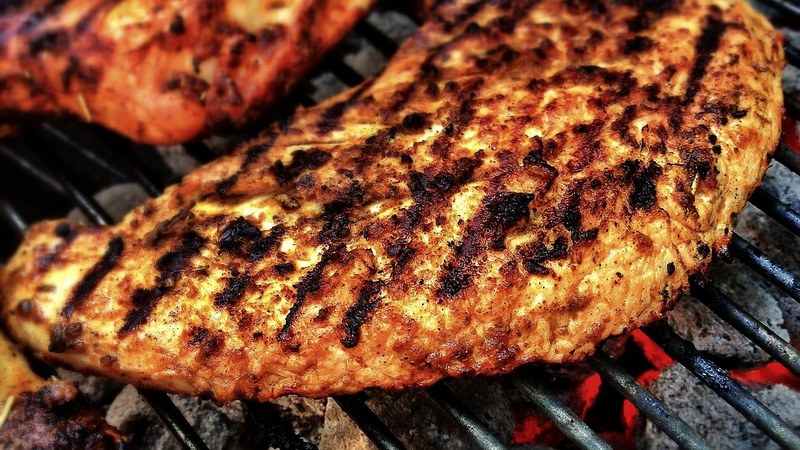
The oven is the least demanding method for a large batch. Heat it to 425°F, spread the seasoned chicken on a lined sheet pan with space between the pieces, and roast boneless thighs for 25 to 30 minutes, breasts for 20 to 25, and bone-in pieces for 35 to 45. Times vary with thickness and crowding, so use a thermometer.
Poaching is gentlest and best for chicken sliced cold for lunches. Bring water to a bare simmer, around 165°F to 170°F, add the chicken, and cook until the center reaches 165°F, about 15 to 20 minutes for breasts. Do not boil hard; agitation makes the meat stringy. Save the liquid for soup.
A skillet is faster but needs attention. Cut boneless chicken into thin cutlets, heat a little oil over medium-high heat, and cook in batches, three to four minutes per side. Overcrowding steams the chicken, so split a large batch between oven and stovetop.
Whichever method you choose, poultry must reach 165°F in the thickest part, measured away from bone. Color and firmness are not reliable. An instant-read thermometer removes the guesswork.
| Method | Best cuts | Approximate time | Texture after reheating |
|---|---|---|---|
| Sheet-pan roast | Thighs, drumsticks, bone-in pieces | 25–45 minutes | Good; stays moist in sauces |
| Gentle poach | Breasts, thighs | 15–20 minutes | Very good for cold lunches |
| Skillet cutlets | Thin-sliced breasts or thighs | 6–8 minutes per batch | Good in wraps and stir-fries |
| Outdoor grill | Thighs, breasts, drumsticks | 12–25 minutes | Good, with a smokier flavor |
Portion the batch into meal packs
Portioning is where batch cooking either saves the week or becomes one large container nobody wants to dig into. Let the chicken rest ten minutes, then cut it into the shape your meals need: strips for stir-fries, cubes for soup and salad, or shreds for tacos. Different shapes feel like different ingredients even from one batch.
Pack in meal-sized amounts, not one giant container. A practical rule is about two cups of chopped or shredded chicken per pack for a family of four, roughly ten to twelve ounces and enough for a pasta dish, a tray of tacos, or a pot of soup. Keep the seasonings separate and use shallow containers so the chicken cools quickly.
Label every pack with the seasoning, cooking date, and the word "cooked." Masking tape and a marker are enough. A freezer full of unlabeled containers is a mystery, and most families will not gamble on a mystery at dinnertime. Freeze flat in bags with the air pressed out so packs stack and thaw quickly.
Scaling trips people up when the batch is larger than the recipe. Suppose a lemon-herb marinade written for four servings calls for two tablespoons of olive oil; for six servings, enter both numbers and the amount, and the tool returns the scaled quantity plus the multiplier. The same check works for salt, spices, and stock. For amounts under a tablespoon, enter decimals; half a tablespoon is 0.5.
Cool it fast, store it cold, reheat it hot
Cooked chicken should not sit at room temperature for more than two hours total, including dinner. On a hot day or outdoors, shorten that to one hour. Divide large pots into shallow containers so the center cools faster, refrigerate uncovered until cool, then cover.
Keep the refrigerator at 40°F or below and the freezer at 0°F. Cooked chicken keeps three to four days refrigerated, so a Sunday batch should be gone by Wednesday or Thursday; frozen, use it within two to six months for best quality. Thaw packs in the refrigerator, and reheat leftovers to 165°F. Never return a half-eaten portion to the main container.
Handle raw and cooked chicken as separate jobs. Use a separate cutting board for raw poultry, or wash it in hot soapy water before it touches anything cooked. Do not rinse raw chicken under the tap; splashing spreads bacteria around the sink. Wash hands, knives, and any surface that touched raw meat.
Some households need a stricter rule. If someone is pregnant, very young, elderly, or living with a weakened immune system, treat storage limits as maximums and reheat every portion thoroughly. When in doubt, throw it out; one pack of chicken is small compared with a night of foodborne illness.
Five dinners from one batch
The packs are building blocks, not finished meals. Each of these takes about fifteen to twenty minutes.
Smoky chicken tacos. Warm two cups of smoky chicken with a splash of water or salsa, then set out tortillas, cabbage, lime, and yogurt. Leftover rice turns the pack into burrito bowls.
Lemon-herb pasta. Boil a pound of pasta, reserving a cup of cooking water. Warm two cups of lemon-herb chicken with olive oil, garlic, and that water, then toss with the pasta, spinach, and lemon. Finish with feta.
Ginger-soy noodles. Stir-fry whatever vegetables are on hand, add two cups of ginger-soy chicken and cooked noodles, and loosen with reserved poaching liquid. A teaspoon of sesame oil adds flavor without heat.
Chicken and rice soup. Simmer broth with carrots, celery, and onion, add a cup of chopped chicken, and stir in cooked rice at the end. The soup takes about twenty minutes.
Lunch wraps and salads. The last pack needs no recipe. Wrap sliced chicken in a tortilla with lettuce and a sauce, or lay it over greens with cucumber, tomato, and lemon dressing. A pack in the refrigerator turns "nothing for lunch" into a five-minute job.
The batch is not a week of identical dinners. It is a week of decisions you no longer have to make at 6 p.m.
Two habits make the system last. Cook and portion on the same day, because chicken left waiting becomes one large, unappealing container. Then use refrigerator packs first and frozen packs later. Rotate the oldest pack to the front of the shelf where you can see it.
Batch Cooking Chicken For The Week FAQ
Can I freeze cooked chicken the same day I cook it?
Yes. Cool it quickly in shallow containers, portion it, and freeze within two hours of cooking. Label the pack and thaw it in the refrigerator, not on the counter.
Is a whole chicken cheaper than buying parts?
It can be, but the comparison is not just price per pound. A whole chicken includes bones and skin, so usable meat is a smaller share of the weight. The carcass makes good stock, which offsets part of the difference. Compare cost per pound of edible meat.
How long does cooked chicken last in the refrigerator?
Three to four days is the usual guidance. Write the cooking date on every container and use the oldest packs first. Discard chicken that smells off, feels slimy, or was left out too long.
Can I marinate raw chicken and freeze it in the marinade?
Yes, and it saves time later. Freeze the raw chicken in the marinade in a flat bag, thaw it in the refrigerator, and cook it within a day of thawing. Very salty marinades can change texture if left on for days, so keep the soy blend short.
This week, buy one family pack, mix the seasonings in jars, and cook the whole batch in one afternoon. Portion it into labeled packs before dinner, and keep the thermometer where you can find it. The first batch takes about an hour; the second takes less.
For more weeknight plans that fit a real family schedule, browse our family meals guides, and use the Recipe Serving Scaler whenever a recipe needs to grow or shrink to match your table.
Priya Patel is a recipe developer and meal-planning writer with a focus on weeknight dinners, school lunches, and grocery budgets that work for real families. She keeps ingredient lists short, uses equipment most kitchens already have, and writes for cooks who are short on time.