How to Reduce Food Waste at Home
Reduce food waste with a use-first shelf, better storage, leftover transformations, and a weekly fridge audit that saves money and time every week.

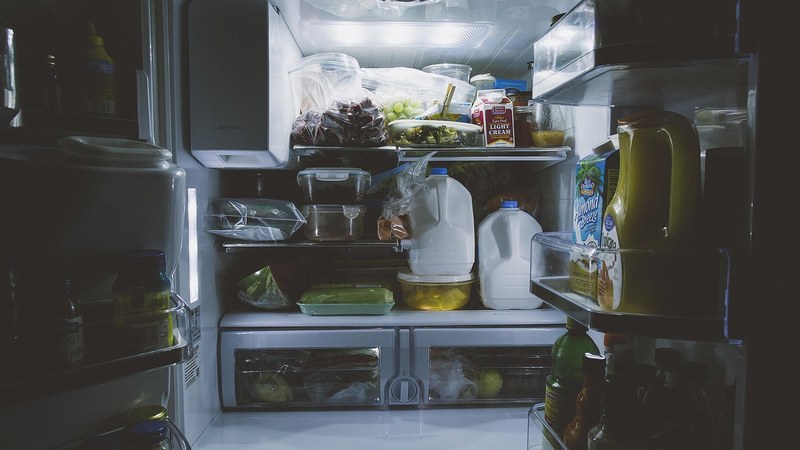
- Food disappears when it has no owner. Give perishables one shelf, one note, and one person who checks them.
- Store each item by what makes it spoil, not by which drawer has room.
- Decide a leftover's next meal before you put the lid on the container.
It is Sunday afternoon and the grocery bags are still on the counter. The spinach goes into the crisper because that is where greens go, the milk goes into the door, and Tuesday's soup gets pushed to the back to make room. By Thursday the soup is growing something, the spinach has turned to liquid, and dinner is being ordered while three good vegetables sit in the drawer.
A full fridge is not a stocked kitchen. Most waste in a family kitchen comes from small defaults rather than one bad decision: nobody owns the spinach, a recipe used half a bunch of cilantro, and the crisper drawer is where food goes to be forgotten. Guilt at the bin fixes none of that. A short loop that repeats every week does.
The loop has five parts: a use-first shelf, storage that matches how each item spoils, a plan for leftovers, a list built from the fridge, and a ten-minute audit before the next shop.
Why food disappears before anyone cooks it
Ask a family where the spinach went and the answer is usually a shrug. It was bought with good intentions on Sunday, moved twice to reach the yogurt, and by Wednesday was green water behind the milk. Nobody decided to waste it. It had no owner and no visible place in the week.
Recipes are the second quiet source. A stir-fry calls for half a bunch of cilantro, taco night calls for two limes, and a cake uses three egg whites. What remains enters the fridge as a fragment with no recipe to belong to. Fragments are hard to use because they demand a decision, and after work nobody wants one more.
Shopping habits do the rest. Bulk packs are a bargain only when the family finishes them; a five-pound bag of potatoes is a good deal until half of it sprouts. Buying for the week you hope to have is common, but the real week includes a late meeting and a takeout night, and the food bought for those nights has nowhere to go.
There is also the invisibility problem. A jar of salsa at the back of the top shelf might as well be in another room, and the crisper drawer is opened only when someone is already holding a vegetable. Food that cannot be seen in three seconds will not be used.
Set up a use-first shelf
Pick one shelf at adult eye level and clear it. This is the use-first shelf, and its only job is to hold food that is open, ripe, or close to its limit. When groceries come in, new items go behind while older ones move forward, like a queue that nothing jumps.
Anything opened belongs there: half a jar of pasta sauce, a cut block of cheese, last night's rice, a salad bag with two servings left. So does produce ripening too fast to finish. A browning banana, a soft pepper, a split tomato move to the shelf, where they become the first thing a cook sees.
Give the shelf a small note. Tape or a dry-erase marker on the shelf edge works better than an app because it is visible at the moment of decision. Write two ideas, not a lecture: "pepper and cheese — quesadillas / eggs." The note turns fragments into a short menu a tired cook can use.
Keep the shelf small. If it overflows, that is not a storage problem; it signals that tonight should be a use-it-up dinner. A shallow bin that slides out is easier for children to reach, and a second low bin for snacks keeps the main shelf free for cooking.
Store food by how it spoils, not by where it fits
Most fridges are organized by habit: milk in the door, vegetables in the drawer. That layout ignores temperature and ethylene gas, the ripening gas released by bananas, apples, avocados, and tomatoes. Leave a ripe banana next to spinach and the spinach ages faster.
Leafy greens last longer dry. A wet bag of spinach steams itself into slime, so line a container with a clean towel and close it loosely. Berries stay unwashed until eaten, because moisture invites mold and one moldy berry spreads quickly. Herbs behave like cut flowers: trim the stems, stand them in water, cover the leaves.
Onions and potatoes keep better apart; each releases moisture and gases that shorten the other's life. Bread belongs in the freezer, sliced, not the fridge, where it stales faster. Milk and yogurt last longer on a middle shelf than in the door, which is warmest.
Cut produce and cooked food need airtight containers and a quick cooldown. A deep pot of soup cools slowly, so divide it into shallow containers. Label each with contents and date, and freeze anything the family will not finish within a few days. Freezing changes texture but stops the clock.
| Question | Counter | Fridge | Freezer |
|---|---|---|---|
| Best for | Ripe fruit, tomatoes, onions, potatoes, bread for today | Dairy, cut produce, berries, greens, cooked leftovers | Bread, meat, soup, ripe fruit, herbs in oil |
| What it slows down | Almost nothing; it lets fruit ripen | Spoilage, for days | Spoilage, for months |
| Common mistake | Leaving ripe fruit next to greens | Milk in the door and greens in a wet bag | Freezing without a label or portion size |
Give leftovers a second job before they go in the fridge
The container is the moment of decision. When food goes into one, decide then what its next meal will be and write it on the lid: "Rice — Friday fried rice" or "Chicken — Tuesday soup." A leftover with a plan is an ingredient; one without a plan becomes a mystery everyone avoids.
Transformation matters more than repetition. Nobody in a family of four wants the same roast chicken three times, but the same chicken becomes tacos with fresh salsa, a quick noodle soup, or fried rice with frozen peas. Roasted vegetables fold into a frittata or a pasta bake. Bread ends become croutons or crumbs for the freezer.
Cook a base once and change the finish. Plain rice, roasted vegetables, and shredded chicken can become three dinners with three sauces. That is not eating the same meal twice.
Cool cooked food within about two hours, refrigerate it in shallow containers, and reheat portions until steaming hot. Do not reheat the same portion twice. When something has been in the fridge longer than you can confidently remember, the bin or the compost is the safer answer.
A leftover with a plan is an ingredient. A leftover without one is a future science experiment.
The plan should start from the fridge, not from a cookbook. Run the generator with your family size and the time you realistically have on a weeknight, then swap two dinners for meals that use what the shelf is holding. A week built around food you already own is the cheapest menu, and the one most likely to be cooked.
Shop from the fridge, then audit it every week
The audit comes before the list. Set a ten-minute timer, take everything off the use-first shelf, and sort it into three piles: eat in the next two days, cook or freeze tonight, and done. The third pile goes to the compost or the bin without debate. Wipe the shelf, put the survivors back with the oldest in front, and leave it half empty on purpose.
Then check the rest of the fridge and the pantry and note what is already there. The list starts with gaps, not wishes. If there are three onions and a bag of carrots, the list does not need more onions; it needs the one ingredient that turns them into dinner. Check the freezer too, because a container of chili is a meal already paid for.
Buy produce in the amount the plan will use. Two loose carrots beat a three-pound bag when the week only calls for two. A smaller loaf beats a family pack if half of it usually goes stale. Rice, oats, frozen vegetables, and canned tomatoes are the exception; they wait patiently, so quantity is safe.
Build one flexible night into the plan and treat the use-first shelf as its menu. Friday works well, because by then the week has produced odds and ends. A frittata, stir-fry, soup, or tray of quesadillas absorbs almost anything. When the shelf is empty, the backup is eggs or pasta.
Keep the audit on the calendar, on the same day as the shop. Ten minutes before leaving the house is enough. An audit before shopping tends to shorten the list and empty the fridge, because the fridge has stopped being a place where food goes to hide.
How To Reduce Food Waste FAQ
Is it safe to eat food after its date label?
It depends on the label. A "best by" date usually refers to quality, so dry goods and some packaged foods are often fine after it if they look and smell normal. A "use by" date is about safety and should be respected. When in doubt with meat, dairy, or prepared food, throw it out; one container costs less than a sick child.
How long can leftovers stay in the fridge?
Common food-safety guidance is three to four days for most cooked foods kept at fridge temperature, and sooner for fish and rice. Label containers with the date, and freeze anything you will not finish inside that window. Reheat portions until steaming hot, and never reheat twice.
What should we do with food we cannot use in time?
Freeze it, share it, or compost it. Most vegetables can be blanched and frozen, ripe fruit frozen for smoothies, and bread cubed for croutons. If a neighbor or a community fridge can use it, pass it on while it is still good. Composting turns the rest into something useful instead of landfill.
How do we get children involved without making it a chore?
Give them the low shelf and a real decision. A child who chooses Friday's use-it-up dinner, or moves the oldest yogurt to the front, is more likely to eat the result. The work is small, but ownership is what changes behavior.
Start with one shelf tonight. Clear it, put the oldest food on it, and write two meal ideas on the edge with tape and a marker. Do the ten-minute audit before your next shop, and let the list grow out of the fridge. Use the Weekly Family Meal Plan Generator to sketch the week, then adjust it around whatever the shelf says. For more dinners, lunches, and shopping routines, browse our family meals guides.
Priya Patel is a recipe developer and meal-planning writer with a focus on weeknight dinners, school lunches, and grocery budgets that work for real families. She keeps ingredient lists short, uses equipment most kitchens already have, and writes for cooks who are short on time.