Meal Planning for Busy Parents
Meal planning for busy parents in 15 minutes: buffer meals, planned leftovers, one shop, and permission to change the plan when the week shifts.

- Spend fifteen minutes choosing five dinners, not fifty recipes. Make the decision once, in daylight.
- Leave two nights open on purpose. A buffer meal is part of the plan, not proof that the plan failed.
- Shop once from a list built off the plan, and keep one pantry meal that needs no shopping at all.
Last Wednesday, the plan on the fridge said meatloaf. It had no way of knowing about the science fair poster that needed printing, the pickup that ran forty minutes late, or the ground beef still frozen solid. By seven, the family was eating cereal at the counter, and the plan had become a note about a promise nobody could keep.
Meal planning earns its bad reputation from versions like that one: a tidy grid of seven dinners, each requiring a recipe, a trip's worth of ingredients, and a calm evening that never arrives. The plan was not too complicated. It was built for an ideal week and then judged against a real one.
What follows is smaller. Fifteen minutes of decisions, five dinners instead of seven, two nights of deliberate slack, and one shopping list. It assumes something will break and builds the break in, instead of treating it as a personal failing.
Why a seven-night plan rarely survives
The failure usually lands midweek. The groceries for a good dinner are in the fridge, but the evening holds a late meeting, a practice pickup, and a child who needs poster board before morning. That dinner belonged to Tuesday, and Tuesday is gone. By Thursday the family has ordered out twice and the spinach has turned to liquid. A plan built for seven calm evenings cannot absorb what Sunday could not see.
The second problem is scope. Seven new recipes demand seven unfamiliar lists, seven sets of skills, and seven new foods in one week. A cautious eater gets a fresh gamble nightly, and the cook never gets faster at anything. Repetition is how weeknight cooking becomes quick: by the third round, quesadillas take twelve minutes instead of twenty-five.
The third problem is that most plans have no fallback. One skipped night becomes a broken week, a broken week becomes takeout, and takeout becomes a quiet decision to stop planning. The fix is a plan that expects to lose a night and knows where to send the family when it does.
The fifteen-minute planning method
Set a timer for fifteen minutes and work in five steps. The goal is not a beautiful chart but a small set of decisions you will not have to repeat at six in the evening.
Minutes 0 to 3: read the calendar, not the cookbook. Find the three hardest evenings — a late meeting, a practice that ends at dinner, a night one adult is away. Write them down first. They decide everything else, because they need the easiest food.
Minutes 3 to 8: choose five dinners from meals you already cook. Pull from a short rotation: pasta with tomato and spinach, quesadillas, taco night, chicken stir-fry, bean burrito bowls, baked pasta. Match meal to night. The 5:40 pickup earns quesadillas or a slow cooker meal; a calm evening can handle roast chicken. If you have not cooked a recipe twice, keep it out of the weeknight rotation for now.
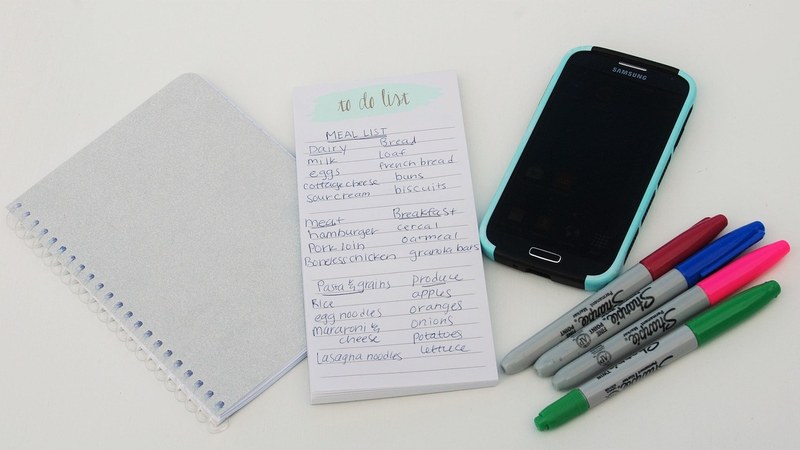
Minutes 8 to 12: build the list by store section. Open the fridge and pantry first and cross off what you own. Write the list in walking order: produce, meat and fish, dairy, dry goods, frozen. A list organized by aisle is one you can finish without backtracking.
Minutes 12 to 15: fill the two open nights and post the plan. One night becomes a planned leftover night, with a double batch cooked earlier in the week. The other stays open for a backup meal, eggs, or an order out you chose in advance. Say out loud which night is which; a plan nobody knows about is a private worry.
Five meals, two buffers, one list, fifteen minutes. That is more honest than a seven-night grid about how many evenings a week actually offers.
The generator above helps when the rotation feels stale. Set your family size, the longest weeknight cook time you want, and any preference, and it returns seven dinner ideas within those limits. Treat the result as a pool, not a schedule: choose five for the hard nights, save the rest, and use the portion note to size each batch. Run it during minute three, before you shop.
Buffer meals and planned leftovers do the same job
A buffer is a night the plan has already given up on, in advance. When Tuesday falls apart, it absorbs the damage without a drive-through run or a fresh round of guilt. There are three kinds, and a good week uses at least two.
A planned leftover night is cooking done earlier on purpose: a double batch of chili on Monday, a whole roast chicken on Sunday, taco filling that returns as burrito bowls. A pantry night needs no shopping at all. A decided out night is takeout you chose ahead of time for a night you knew would run long, so it costs one evening instead of the week's budget.
Leftovers only work if the double batch happens on a night that can afford it. Sunday's chicken becomes Monday's wraps. Monday's chili returns over Wednesday's baked potatoes. Label the container with the day it will be eaten, not the day it was cooked. Cool and refrigerate promptly, reheat until steaming, and throw out anything you are unsure about.
The pantry night needs a boring shelf: eggs, tortillas, canned beans, pasta, tomato sauce, rice, frozen peas, and shredded cheese. Those eight items make omelets, bean quesadillas, pasta with peas, and fried rice. Restock before they run out, so the backup exists on the night you need it.
| Approach | Seven fixed dinners | Five dinners plus buffers | No plan, shop daily |
|---|---|---|---|
| Time to plan | 30 to 45 minutes | 15 minutes | None up front |
| Main grocery trips | One, if the list holds | One, plus a stocked shelf | Three or more |
| A lost evening | Breaks the week | Moves to a buffer night | Takeout by default |
| Good for new cooks | Low, if recipes are new | High, with familiar meals | Unpredictable |
| Best for | Planners with predictable weeks | Most busy households | Very small families with flexible evenings |
Shop once, with a list that matches the plan
One main shopping trip is the second half of the method. The list from minute eight came from the plan, is ordered by aisle, and crosses off what you own. It is also why the plan survives to Thursday: the food it describes is in the house.
Shop for the plan before you shop for the sale; a discount on something unplanned is not a saving if it softens in the fridge. Buy the produce the five dinners need, the backup shelf items as they run low, and the double-batch ingredients. If the store is out of one item, substitute inside the meal: frozen peas for spinach, thighs for breasts.
Size quantities to your family, not the recipe card. A recipe for four feeds two adults and one child willing to eat that night, not four people hungry after practice. Start from the generator's portion note, then adjust after a week of watching what leaves the plates.
A later produce run is fine; unplanned trips every day are what the list prevents.
When the week goes sideways, forgive the plan
The plan is a default, not a contract. That sentence keeps meal planning alive past the third week. A plan is useful while it removes decisions; it stops being useful when it becomes a character test the family is failing.
When a night collapses, take the smallest action. Do not re-plan the week. Pick from the bench: the leftover container, the pantry night, the eggs, the out night you already allowed. Move tomorrow's meal into tonight's slot if the ingredients will hold. A ten-second substitution beats a perfect new plan written in frustration at nine at night.
Give the week five minutes on Friday. Ask which meals were cooked, which ingredients are left, and what made the good nights good. If quesadillas rescued Tuesday again, schedule them on purpose next week instead of treating them as a rescue. If the roast chicken demanded more energy than the evening had, move it to a calmer night.
Involve the family in bounded ways. Each child picks one dinner from a short list of meals the household already cooks; the choice is real, the options are yours. Two adults can split the cooking nights by weekday so neither is the permanent default. A child who chose Thursday's pasta eats it without much argument.
Some weeks cannot be saved. Illness, a deadline, a burst pipe: drop to the pantry shelf and the freezer, stop shopping until you have eaten what you own, and wait until the week has actually returned to write a new plan. Five home-cooked dinners out of seven is a good week. The two that slipped went to buffers, which is what they were for.
A plan you can abandon on Wednesday is worth more than one you can only keep by never having a bad week.
Meal Planning For Busy Parents FAQ
Do I really need to plan all seven dinners?
No. Plan five and leave two nights for a planned leftover and a buffer. The empty slots are part of the plan; they are what makes the other five possible.
What if someone in the family will not eat the planned meal?
Keep one food on the plate the child reliably eats and let the rest be optional. The plan is for the household, not a short-order kitchen; repeated, low-pressure exposure does more than cooking a replacement every night.
How do I plan around sports and late meetings?
Read the calendar before choosing any meal. Put the fastest dinners on the hardest nights and save longer cooking for the calm ones. If a night has no calm at all, plan it as a buffer.
Should I plan breakfast and lunch too?
Start with dinner, the meal with the most decisions and the least energy. Breakfast works better as two or three rotating options than a seven-day grid, and school lunches usually follow protein, produce, and a grain.
This weekend, set a fifteen-minute timer and plan five dinners. Choose nights by what the calendar says, write the list by aisle, pick one leftover night and one open night, and stock the backup shelf. Then post it, photograph it, and let the week do what weeks do.
More strategies for feeding a family on real evenings live in our Family Meals section, and the Weekly Family Meal Plan Generator can refill the pool when the rotation feels thin.
Priya Patel is a recipe developer and meal-planning writer with a focus on weeknight dinners, school lunches, and grocery budgets that work for real families. She keeps ingredient lists short, uses equipment most kitchens already have, and writes for cooks who are short on time.