Rainy Day Activities for Toddlers
Safe, simple rainy-day activities for ages 1–3, built around sensory play, short attention spans, and materials you already have at home and a safety list.

- Plan for short bursts, not a full day. Ten to twenty minutes per activity is a realistic block for a toddler, and the reset between blocks matters as much as the play.
- Pick one active game, one sensory setup, and one calm activity. That mix carries a rainy afternoon further than five craft projects that all require sitting still.
- Contain the mess before it starts: one gated room, one washable mat, one shallow bin, and a clear stop signal.
At 9:40 on a rainy Saturday, the living room already looks like a small storm passed through it: one sock on the lamp, a cardboard box half in the hallway, and a two-year-old asking to go outside for the fourth time. The craft you found online lasted four minutes, mostly because it required a glue stick, clean fingers, and a child willing to sit still. The day is not ruined, but it has lost its shape.
Toddlers do not need a full schedule of entertainment. They need a few small, repeatable things to do in a room where they can move, touch, and make noise without being told no every ninety seconds. Ages one to three are a specific audience. They explore with their mouths, they drop an idea the moment it stops being interesting, and they need an adult within arm's reach the whole time.
The plan below is built around three kinds of play rather than a long list of crafts. It covers the setup, a handful of activities that use what is already in your kitchen, and the safety rules that matter most when the child on the floor is still putting things in their mouth.
Why toddler rainy days fall apart
Most indoor plans fail before lunch, and not because the activities are bad. They fail because the list is written for a child who can follow instructions, wait for glue to dry, and stay at a table. A toddler is a different kind of player. The paper plate craft becomes a frisbee, the cotton balls end up under the couch, and the adult spends more time redirecting than playing.
Attention span is the first mismatch. A one-year-old may give a new material ninety seconds before moving on. A three-year-old may stay with the same bin of dough for twenty minutes, then never touch it again that week. Planning for the average of those two children is planning for neither. The useful unit is not an hour of activity but a short block with a clear beginning and end.
The second mismatch is freedom of movement. A rainy day spent in a small playroom with a gate on the door can feel like a cage to a child who is used to running in the yard. When the body has no outlet, the hands get busy in the wrong places: pulling books off a shelf, climbing a radiator, unrolling the toilet paper. Active play is not a break from learning. For a toddler, it is the main event.
The third mismatch is adult energy. Many parents treat a rainy day as a performance, with activities lined up like scenes in a show. That works for about forty minutes. A better frame is a rhythm: move, make a mess, wind down, repeat. Build the day around three or four blocks of fifteen to twenty minutes, with meals, diaper changes, and quiet time in between. If a block flops, you have lost fifteen minutes, not the afternoon.
One more thing worth saying plainly: you do not need to fill every hour. A toddler who wanders around a safe room with a wooden spoon for ten minutes is not bored and does not need rescuing. Boredom with a familiar object is often the moment before play starts.
Set up one room that can take a mess
Choose the room with the least to ruin. A kitchen with a wipeable floor, a dining area, or a living room with rugs you can roll back will all work. What matters is that spills can be wiped, crumbs can be swept, and nothing valuable sits within arm's reach of a toddler with a scoop.
Before the rainy day arrives, walk the room at knee height. Look for outlets without covers, lamp cords, houseplant soil, pet bowls, low shelves with small objects, and anything the child can pull over. Remove or block those items once, and you will spend the afternoon playing instead of saying no. This is the idea behind a yes space: a room where almost everything a toddler can reach is allowed.
The physical setup is simple. Lay an old sheet or a shower curtain on the floor for sensory play; the boundary does the work that a hundred reminders cannot. Put a shallow plastic bin in the middle, and keep a stack of towels and a pack of wipes within reach of the adult, not the child. A small basket holding three or four tools is enough: a scoop, a cup, a funnel, and a cloth. More tools means more scattering, not more play.
Rotate what is available. Toddlers lose interest in a room that looks the same every day, but they do not need new toys. Put most of the toys in a closet and bring out two bins at a time. A basket of Duplo that has been out of sight for a week feels new on a rainy Tuesday. If the child is two and a half or older, let them choose one bin from two options; that small decision keeps them engaged longer than a surprise activity.
Keep a snack and a water cup in the room. A hungry toddler will not tell you they are hungry. They will fall apart over a sock. A five-minute snack break in the middle of a block is cheaper than a meltdown that ends it.
Sensory play for ages 1 to 3
Sensory play is the work of this age group. Filling, dumping, squeezing, and smearing are how toddlers learn about weight, texture, and cause and effect. There is no finished product, and that is the point. The goal is a safe material, a shallow container, and enough time to repeat the same motion thirty times.
Water play is the easiest option and the one most toddlers return to. Put one or two inches of room-temperature water in a dishpan on a towel. Add a cup, a sponge, a small strainer, and a couple of plastic animals. Keep the child within arm's reach the entire time, never fill the pan more than a few inches, and empty it the moment play ends. Water in a shallow pan is a different activity from water in a tub, but the rule is the same: an adult is watching, not nearby.
Taste-safe dough covers the child who still mouths everything. Mix one cup of flour, half a cup of salt, half a cup of water, and a tablespoon of vegetable oil. Knead until it holds together, and add a little more flour if it sticks. Skip essential oils and glitter for children under three. A batch keeps for a few days in a sealed bag in the fridge. For an older toddler, add a rolling pin and cookie cutters; for a younger one, a butter knife and a few large shapes are enough.
A sticky wall works for toddlers who need to stand and move. Tape a sheet of clear contact paper to a wall or cabinet door, sticky side out, and give the child large fabric scraps, felt pieces, or big plastic lids. Pressing and pulling is satisfying, and the pieces stay on the wall instead of the floor. Skip small stickers and anything that fits inside a toilet paper tube.
A dry sensory bin is for children who no longer mouth materials consistently, usually closer to two and a half or three. Use large pasta shapes, big pom-poms, measuring cups, and a scoop. Rice, beans, and beads are common fillers, but they are choking hazards for a child who still tastes everything, so save them for later. A shallow bin with two inches of filler is easier to manage than a deep one, and the mat catches what spills.
The table below compares the setups by what they demand from you, not by how impressive they look.
| Setup | Prep time | Mess level | Supervision | Holds attention |
|---|---|---|---|---|
| Water pan | 2 minutes | Medium, contained by towel | Within arm's reach | 10 to 25 minutes |
| Taste-safe dough | 5 minutes | Low once on a mat | Nearby, watching mouthing | 10 to 20 minutes |
| Sticky wall | 3 minutes | Very low | In the room | 5 to 15 minutes |
| Dry sensory bin | 3 minutes | High, needs a sheet | Within arm's reach | 15 to 30 minutes |
| Pillow path | 4 minutes | Low, floor clutter | Active spotting | 15 to 20 minutes |
Use the generator when you want a quick second opinion. Set the age group to 2–4 for a toddler near the top of this range, choose the time you can actually supervise, and pick the materials you already own. The suggestions are starting points, not instructions. A two-year-old who cannot follow rules for Simon Says will still enjoy carrying a rolled sock around the room, and a three-year-old who loves pretend play can turn a cardboard box into a car with a paper plate steering wheel.
A sensory bin is not a craft. There is nothing to finish, nothing to hang on the fridge, and no correct way to do it.
Active games that burn real energy
Movement is the part of the day that keeps everything else possible. A toddler who has jumped, crawled, thrown, and carried things for twenty minutes is a different child at lunch. The games below are short, use household items, and need one adult to spot rather than a referee.
Sock toss works from about eighteen months. Roll five or six pairs of socks into soft balls and set a laundry basket a step or two away. Start close, then move the basket back. For a younger toddler, hand them the socks and let them drop them in; for an older one, add a tape line to stand behind. The game ends when interest ends, which may be six throws or sixty.
A pillow path is a row of couch cushions and bed pillows on the floor, spaced so the child can step from one to the next. Keep it low, clear the area around it, and stay close. This is not a climbing structure; it is a balance game. Add a "bear cave" made from a cardboard box or a blanket over two chairs, and the path becomes a route with a destination. Most toddlers will walk it ten times if there is something to find at the end, such as a stuffed animal to rescue.
Laundry basket ball uses a soft ball or a rolled pair of socks and any wide basket. Standing or sitting, the toddler tries to get the ball in. Sitting on the floor with the basket between their legs makes the game easier and teaches them to aim. Resistance to the idea that the ball must go in the basket is normal; let them put the ball in by hand, dump it out, and start again.
A tape line on the floor can be a balance beam, a road for toy cars, or a train track. Blue painter's tape lifts cleanly from most floors, which makes it the rare rainy-day material that cleans up in one pull. Walk the line heel to toe with the child, then let them drive a car along it. When the tape loses its stick, the game is over, not ruined.
Color hunt is a quieter active game. Name a color and ask the child to bring you something that color. Start with a color that appears everywhere, like red or blue, then move to harder ones. For a one-year-old, place three objects of the same color on the floor and let them choose; for a three-year-old, give them a small basket and send them to find three things. The game ends with a collection to put away, which is its own activity.
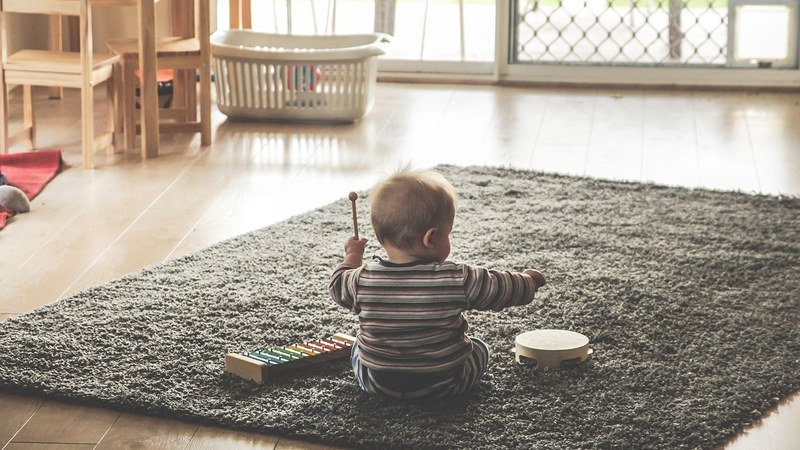
A kitchen band is loud and worth it on a day that has run out of options. Give the child a wooden spoon and two pots, or a plastic container and a lid. Keep the tempo slow and take turns leading. Fifteen minutes of drumming is a lot for adult ears, so decide in advance how long it will last and use a timer. If the noise is too much, move the band to a carpeted room and put a folded towel under each pot.
Watch the clock less than you watch the child. Stop a game while they are still enjoying it, rather than waiting for the moment they lose interest. That way the next game starts from a better mood, and the first one stays something they want to do again tomorrow.
Safety rules that matter for toddlers
Most toddler injuries at home are predictable, which means they are also preventable. The rules below are not a complete safety plan. They are the ones that come up most often during indoor play.
Choking comes first. If an object fits through a toilet paper tube, it is too small for a child under three. That covers beads, coins, small magnets, button batteries, plastic caps, and pieces of broken toys. Balloons are a particular risk for this age group, both inflated and popped, so keep them out of toddler play entirely. Food during activities should be limited to soft options, and an adult should be sitting with the child, not moving through the room.
Water needs eyes, not ears. A toddler can drown in an inch of water, and it happens quietly. If a water pan is out, an adult is within arm's reach and not looking at a phone. Empty the pan as soon as play ends, and do not leave it to deal with later. Bathroom doors stay closed, and buckets, coolers, and pet water bowls are emptied or put away.
Anchor what can tip. Bookcases, dressers, and televisions should be attached to the wall or moved out of the play area. A toddler who pulls up on an unsecured dresser can bring it down. This is one of the few home projects worth doing before a rainy day, not during one.
Cords and plastic bags are easy to miss. Blind cords should be secured out of reach, and plastic bags, wrap, and packaging should go straight into a lidded bin. A toddler in a room with a loose plastic bag is in more danger than one with a basket of toys.
Craft materials need a second look. Washable paint is the only kind to use with this age group, and even then, a child who still mouths everything is better served by taste-safe dough and water. Skip glitter, small googly eyes, beads, and anything that can break into pieces. Scissors stay in adult hands. Glue sticks are fine for a three-year-old with supervision; glue bottles are not.
Food-based play needs an allergy check. Dough made with flour, salt, and oil is usually safe, but if a child in the home has a wheat allergy, choose a different material. Peanut butter playdough and recipes with powdered drink mix are not worth the risk for a toddler group. Ask before a playdate, and keep the packaging so another parent can check the ingredients.
If a child swallows something that might be dangerous, call your pediatrician or poison control right away rather than waiting for symptoms. If a child is choking, unable to breathe, or has been seriously hurt, call emergency services. A home guide cannot replace medical advice, and it is not meant to.
Rainy Day Activities For Toddlers FAQ
My 15-month-old puts everything in her mouth. Which activities still work?
Start with water play, taste-safe dough, a sticky wall with large fabric pieces, and games that use big soft objects such as rolled socks and pillows. Skip dry rice, beans, beads, small pom-poms, and anything that fits through a toilet paper tube. Stay within arm's reach, and end the activity if the child keeps trying to eat a material that is not food.
How many activities do I need for a whole rainy day?
Three or four blocks of fifteen to twenty minutes are enough for most toddlers, with meals, naps, and free play in between. A typical day might be active play before lunch, sensory play after nap, and a calm activity before dinner. You do not need to fill every hour, and a child who wanders around a safe room is not failing at play.
What if my toddler loses interest after two minutes?
That is normal, especially for a new material. Leave the setup out for a few minutes without pressure, and let the child come back if they want to. If they are done, clean up and move on. Repeating the same activity on another day often holds attention longer than pushing through a bad first try.
Can a one-year-old use the activity generator?
The generator's youngest group is 2–4, so for a one-year-old, use its ideas as a starting point and simplify them. A pillow path becomes two cushions to crawl over, and a color hunt becomes three objects to pick up. Choose activities that do not depend on following rules, and keep the small pieces out of reach.
Pick one bin, one towel, and one active game before the next rainy day arrives. You do not need a craft store, a printed schedule, or a child who sits still. You need a safe room, a few materials, and permission to stop after fifteen minutes. For more indoor ideas sorted by age and mess level, browse our kid activities section. When you want a quick set of options for the time you have, the Rainy Day Activity Generator will suggest three, and you can take it from there.
Maya Thompson is a mother of two and a former project coordinator who writes about family schedules, chores, and the small systems that keep a household running. She tests the checklists she publishes with her own family and favors routines that survive a busy week.
Related Guides
How to Raise a Reader Without a Fight
Three things to knowMost reading fights come from pressure and book choice, not from a child who hat...

Backyard Activities for Small Spaces
Three things to knowMeasure the usable floor, the door swing, and the shade before buying anything; ...
Quiet Time for Kids Who Stopped Napping
Three things to knowQuiet time is rest, not sleep. A child who has dropped the nap still needs a pre...