How to Paint a Room in a Weekend
Paint a room in a weekend with a realistic order: prep, cutting in, rolling, dry times, two coats, cleanup, ventilation, and a simple timeline.


- Two coats of water-based wall paint fit in a weekend when prep starts Friday evening; the plan collapses when prep starts Saturday at noon.
- Work one wall at a time: cut in the edges, then roll the field while the brushed band is still wet.
- Follow the recoat time on the label, keep windows open, and test older paint for lead before sanding.
At nine on Saturday the cans are open and the roller is wet, but the room is still full: bed in the middle, outlet covers on the dresser, nail holes above them empty. By four, one wall is painted and the family is eating in the hallway. The paint was never the hard part; the order was.
A weekend covers one ordinary room: walls, two coats, water-based paint, one adult with a helper for the heavy lifting. It does not cover a whole floor, a ceiling and trim on the same schedule, or a room that still needs drywall repair. Decide the scope before you buy anything.
The sequence below runs from Friday evening to Sunday afternoon and marks where weekends usually slip. It also covers ventilation, temperature, and older homes. Lead paint, mold, and damaged plaster are not paint problems, and they deserve a professional's eyes.
A weekend plan that fits real dry times
Measure the walls rather than the floor before you shop. A 12-by-14-foot bedroom with an eight-foot ceiling has about 416 square feet of wall; two doors and a window remove roughly 60, leaving 356. At two coats and an assumed 350 square feet per gallon, that is a little over two gallons, so buy two gallons plus a quart. The Paint Coverage Calculator runs the same arithmetic and rounds up to the nearest quart.
Enter the wall area, coats, and openings, then compare the estimate with the label. Coverage varies by product and texture, so treat the result as a shopping number, not a promise.
Friday evening is for the unglamorous work. Clear the room, take down curtains and hardware, and move furniture to the center under a drop cloth. Shop earlier in the week if you can; paint counters are crowded on Saturday. Bring home paint, a roller frame, a two-inch angled brush, painter's tape, filler, sandpaper, and primer. Read the recoat time and temperature range on the label, because those lines set the weekend.
Saturday is prep and the first coat; Sunday is the second coat, cleanup, and moving back in. A ceiling, a dark color change, or heavy trim each add hours, so treat them as separate projects. One person can finish a standard bedroom on this plan.
Prep in order: repair, sand, clean, protect
Prep has a sequence, and most delays come from doing it backward. Sanding before patching coats wet filler with dust; taping before dusting traps grit; cleaning after taping softens the edge. Work in this order: empty, repair, sand, dust, clean, protect, prime.
Press around cracks and holes; loose plaster or bubbling paint has to come off before filler goes on. Fill small holes with lightweight spackle, let it shrink, then apply a second pass. Widen a seam crack, fill it, and sand it flat. A patch should feel level under your palm; paint hides color but exaggerates texture.
Sand the patches with fine paper and dust everything with a damp cloth or a brush-fitted vacuum. Kitchen walls need a degreasing wash; bedroom walls usually need only dust removal. When the surface is clean and dry, tape the trim, cover the floor, remove the outlet covers, and prime the patches so filler does not soak up paint and leave dull spots.
Older homes need a stop here. Paint applied before 1978 may contain lead, and sanding or scraping it can put lead dust into the air and onto the floor. Test the paint or have it evaluated; if lead is present, use wet methods, keep children and pregnant people out, and hire a certified renovator for sanding or demolition. This is the one part of a paint job where a shortcut is not worth taking.
Ventilation starts now, not when the first coat goes on. Open windows, set a box fan to pull air out of the room, and close the door to the rest of the house if you can.
Cut in first, then roll into a wet edge
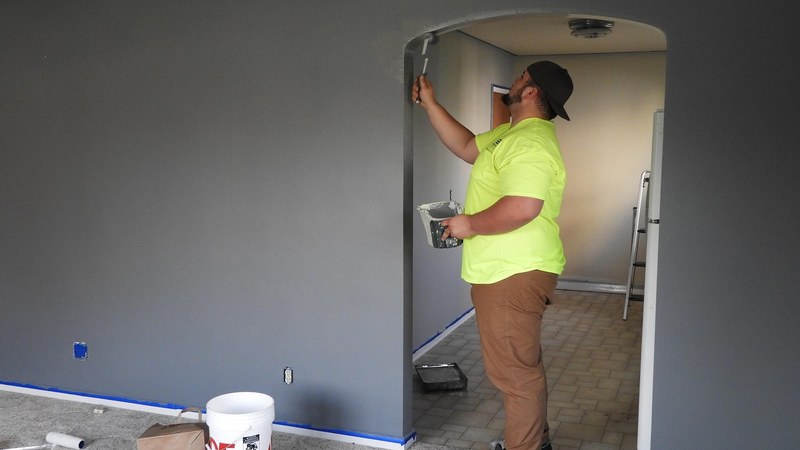
Paint the ceiling first if it is in scope, because drips fall. Then take the walls one at a time. Cutting in means brushing a two- to three-inch band along the ceiling line, corners, and trim with an angled brush, loaded lightly. Watch the tip rather than the handle; a little paint on the tape is fine, drips are not.
The common mistake is cutting in the whole room and then rolling it. By the time the roller reaches the first corner, that band has dried, and the rolled paint cannot blend into it. The result is a visible ridge along every edge, called a lap mark. Cut in one wall, then roll that wall while the band is still wet. In a large room, work in sections of eight to ten feet.
Match the roller cover to the surface: a short nap for smooth drywall, a medium nap for light texture. Load the roller evenly through the tray rather than dunking it. Start near the cut-in edge, roll a W, then fill the W with overlapping strokes from top to bottom. Keep the edge wet by rolling back into fresh paint instead of starting a new strip beside dry wall.
Pressing hard squeezes paint out and leaves lines. Two thin passes cover better than one heavy one. A streaky first coat is normal; the second evens the color. Check the wall at a low angle before you leave, while a missed patch is easy to fix.
Dry time and the two-coat schedule
"Dry to the touch" and "ready for another coat" are different states. Paint that feels dry can still be soft underneath, and a second coat applied too early can lift the first or leave a gummy surface. Water-based wall paints commonly list a recoat window of a few hours, but humidity, temperature, and coat thickness stretch it. Follow the can, not the clock.
The schedule that fits a weekend is simple: first coat Saturday midday, second coat Sunday morning. The walls dry overnight with the room closed and the windows cracked, and you keep a margin for a slow start, a missed spot, or a child who needs something. If the label allows a short recoat and the room is warm and dry, both coats can go on Saturday, leaving Sunday for cleanup. That version is faster but less forgiving.
| Step | Same-day two coats | Overnight two coats |
|---|---|---|
| First coat | Saturday late morning | Saturday afternoon |
| Recoat wait | The label window, often a few hours | Overnight |
| Second coat | Saturday afternoon | Sunday morning |
| Room back in use | Saturday evening, after light cleanup | Sunday afternoon |
| Main risk | Recoating too early, lifting or gumming the first coat | A rushed Sunday and less time for touch-ups |
| Best for | Warm, dry rooms and paints with a short recoat time | Most family schedules and older, cooler homes |
Watch temperature and humidity as closely as the clock. Most interior paints list a minimum and maximum temperature, and a cold or rainy day can double the wait. Heating the room for an hour does not reset the wall. Full cure is slower than recoat, so keep the room gentle for a week: no scrubbing, no ladders against the wall, no heavy furniture pressed into the paint.
Cleanup, ventilation, and moving back in
Pull tape at the right moment. For crisp lines, remove it while the paint is just set, slowly and at a shallow angle. If it has hardened, score the edge with a utility knife first. Never rip it off in one pull, and never leave it on for a week.
Wash brushes and rollers in a bucket, not under a running tap; water-based paint should not go down the drain in quantity. Let solids settle, pour off the clear water, and trash the sludge. Check local disposal rules. Store leftover paint in a labeled can with the room, color, finish, and date, somewhere it will not freeze; that can is your touch-up supply.
Ventilation continues after the last coat. Keep windows open and the fan running for at least a day, longer if the label says so. Low-odor and low-VOC paints still release vapors, and smell is a poor measure of air quality. Keep children, pregnant people, and anyone with asthma out until the odor fades and the label's ventilation time has passed.
Wait before you reinstall. Outlet covers can go back once the wall is dry to the touch, but furniture should wait until the paint has cured enough not to stick; felt pads prevent marks. Pictures and shelves need longer, because a heavy frame against soft paint leaves a shadow. In an older home, finish with a wet wipe-down of floors and sills and a vacuum with a fine filter.
How To Paint A Room In A Weekend FAQ
Can two coats really dry in one weekend?
Yes, for one room with water-based paint, if you follow the label's recoat time and temperature range. Humidity, thick coats, and cool walls stretch the wait. The overnight schedule leaves room for a slow start and a second look.
Do I need to prime the whole room?
Not usually. Prime patches, bare drywall, repaired areas, stains, and any wall with a drastic color change. Ask the paint counter whether a tinted primer helps when going from dark to light. Primer does not replace cleaning, and it will not fix peeling paint.
Can we sleep in the room the night after painting?
It depends on the paint and the ventilation. Keep windows open and a fan running, follow the label, and keep children, pregnant people, and anyone with breathing sensitivities out until the odor fades. If the smell is strong, sleep elsewhere for a night.
What if the house was built before 1978?
Assume the paint may contain lead until it is tested. Do not dry-sand, scrape, or demolish painted surfaces without evaluating them. Use wet cleaning, keep the work area sealed from the rest of the home, and hire a certified renovator when lead is present.
Start Friday evening by measuring the walls and clearing the room, and let the label's recoat time set the schedule. One room, two coats, and a Sunday afternoon for cleanup is a weekend that finishes. For more repair and upkeep guides, see our Home Systems & Fixes section, and size the job before you shop with the Paint Coverage Calculator.
Daniel Reyes spent ten years in residential maintenance before moving into writing. He covers seasonal upkeep, cleaning systems, stain removal, and the repairs homeowners can safely handle themselves, with clear notes on when to stop and call a professional.